Objective & Overview
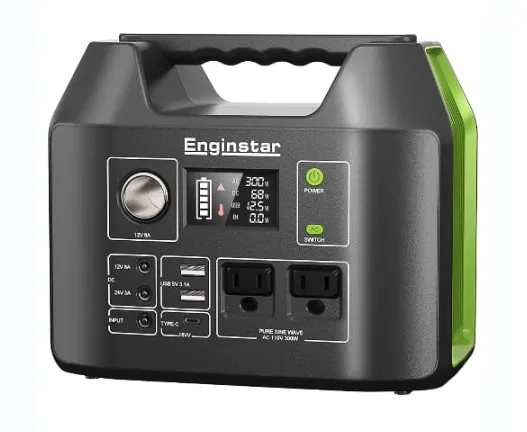
The Enginstar R300 portable power station was originally acquired for off-grid tent camping to power a nighttime CPAP machine and run portable amateur radio bench gear. After three months of periodic use—including a successful two-day field camping trip—an unexpected thermal runaway issue was discovered at the 24V DC output barrel connector while idling on the workbench.
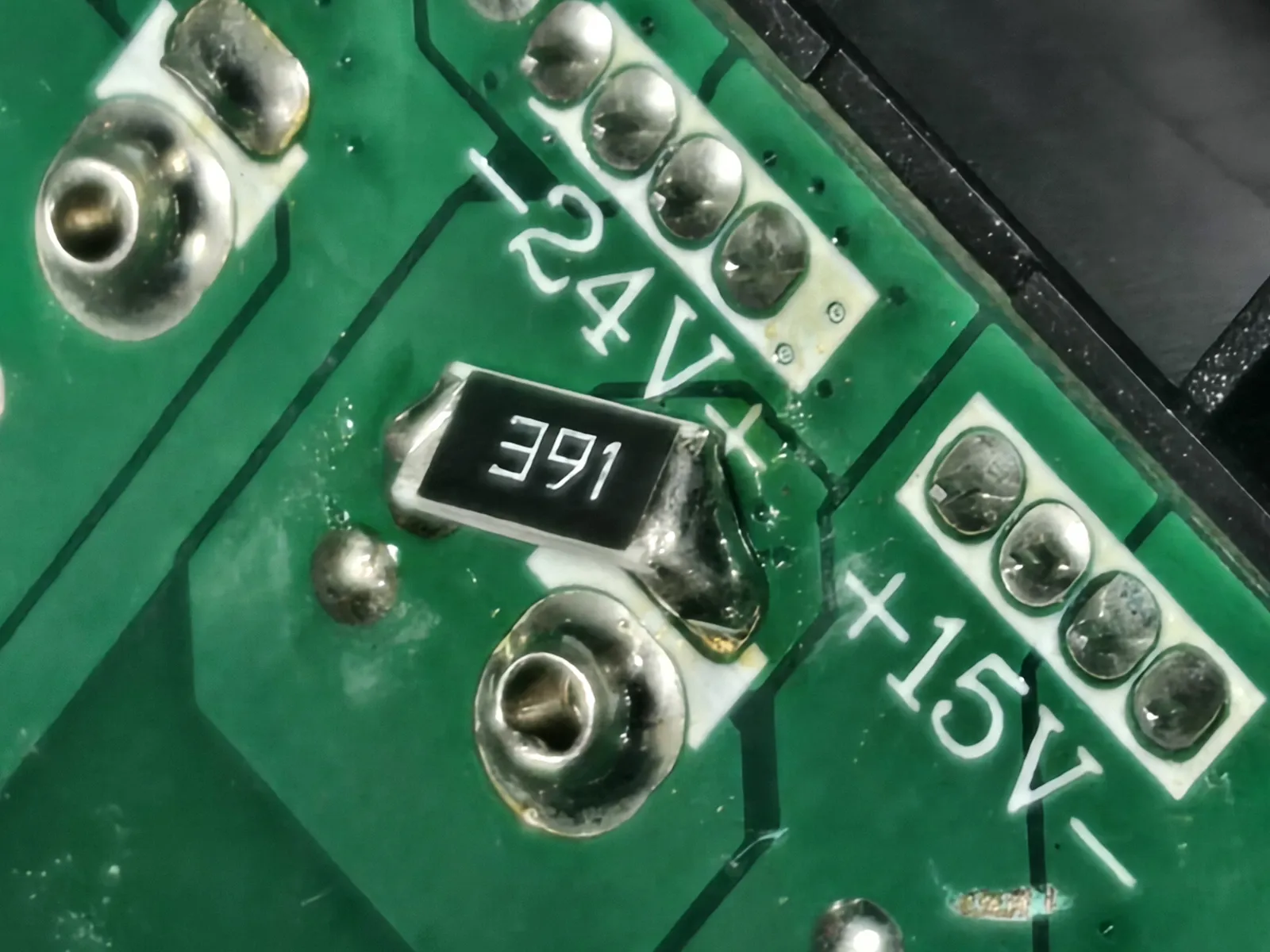
Upon noticing the unused port was hot to the touch, customer support provided a full refund and advised disposal without return. A full teardown and PCB inspection revealed a serious SMT manufacturing defect: a stray 391 Ω resistor dropped by a pick-and-place robot had bridged the 24V positive rail and ground plane across the connector pins prior to solder reflow. Desoldering the parasitic bridge cleared the fault and safely returned the unit to service.
Items & Components Used
| Item / Component | Model & Specs | Role / Configuration |
|---|---|---|
| Power Station | Enginstar R300 (296Wh / 300W AC) | Unit under test; portable Li-ion power supply |
| Faulty Component | 391 Ω SMD Resistor | Stray component bridging 24V @ 3A DC rail to Ground |
| Rework Tools | Soldering Iron, Flux & Desoldering Braid | Component removal and PCB pad cleanup |
| Diagnostic Equipment | Digital Multimeter & Thermal Probing | Continuity check, rail voltage, and parasitic load isolation |
Visuals & Schematics
Build Log & Engineering Notes
Idle Thermal Overheating on 24V Rail
While using the power station for an off-grid amateur radio bench setup, the unused 24V DC jack was found to be hot to the touch despite having no connected load. Because a hard short would trip the internal battery management system (BMS) overcurrent protection or cause catastrophic failure, the symptoms indicated a high-resistance parasitic leakage path drawing continuous power directly from the 24V step-up converter.
SMT Pick-and-Place Misfeed Identified
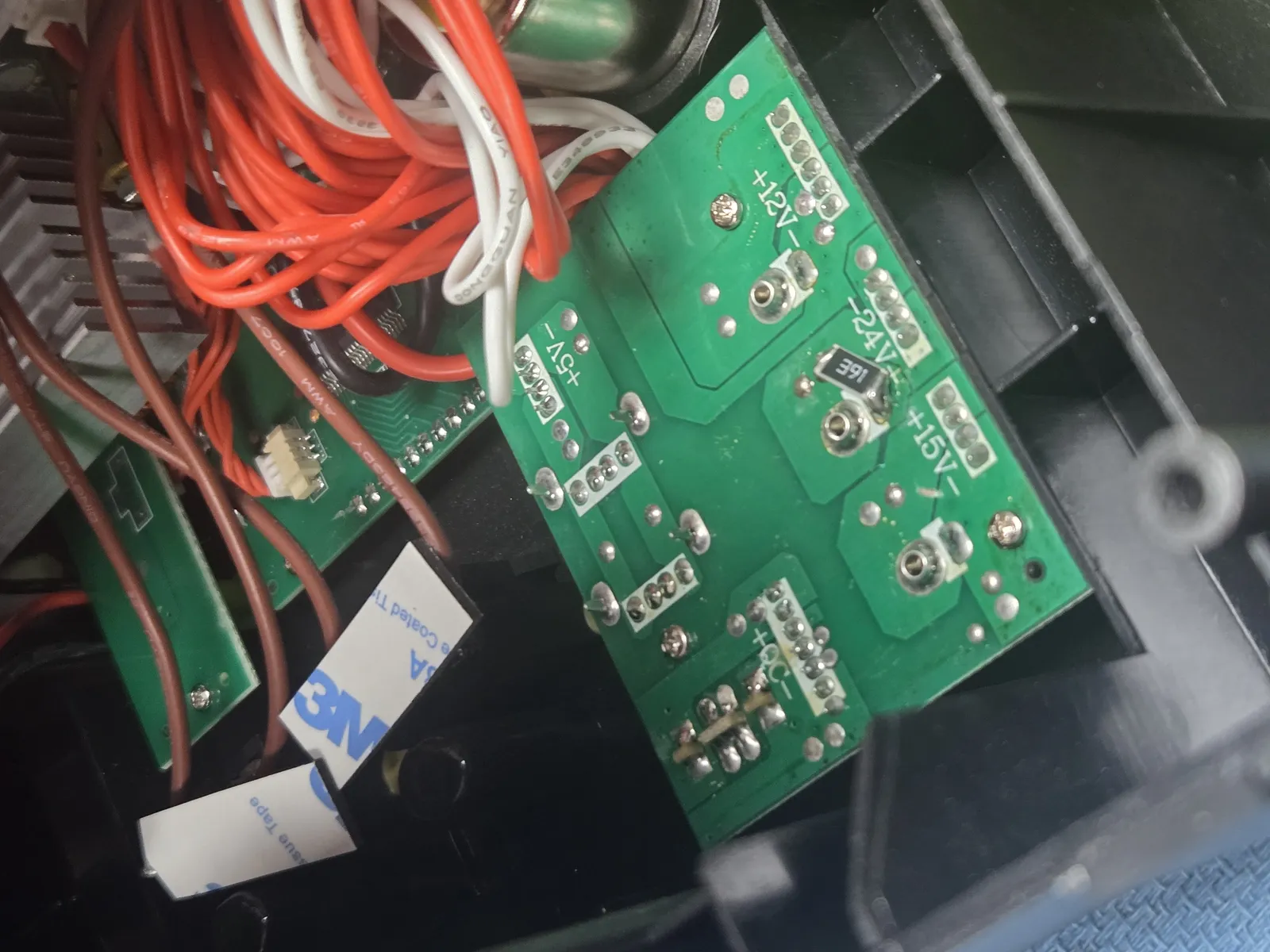
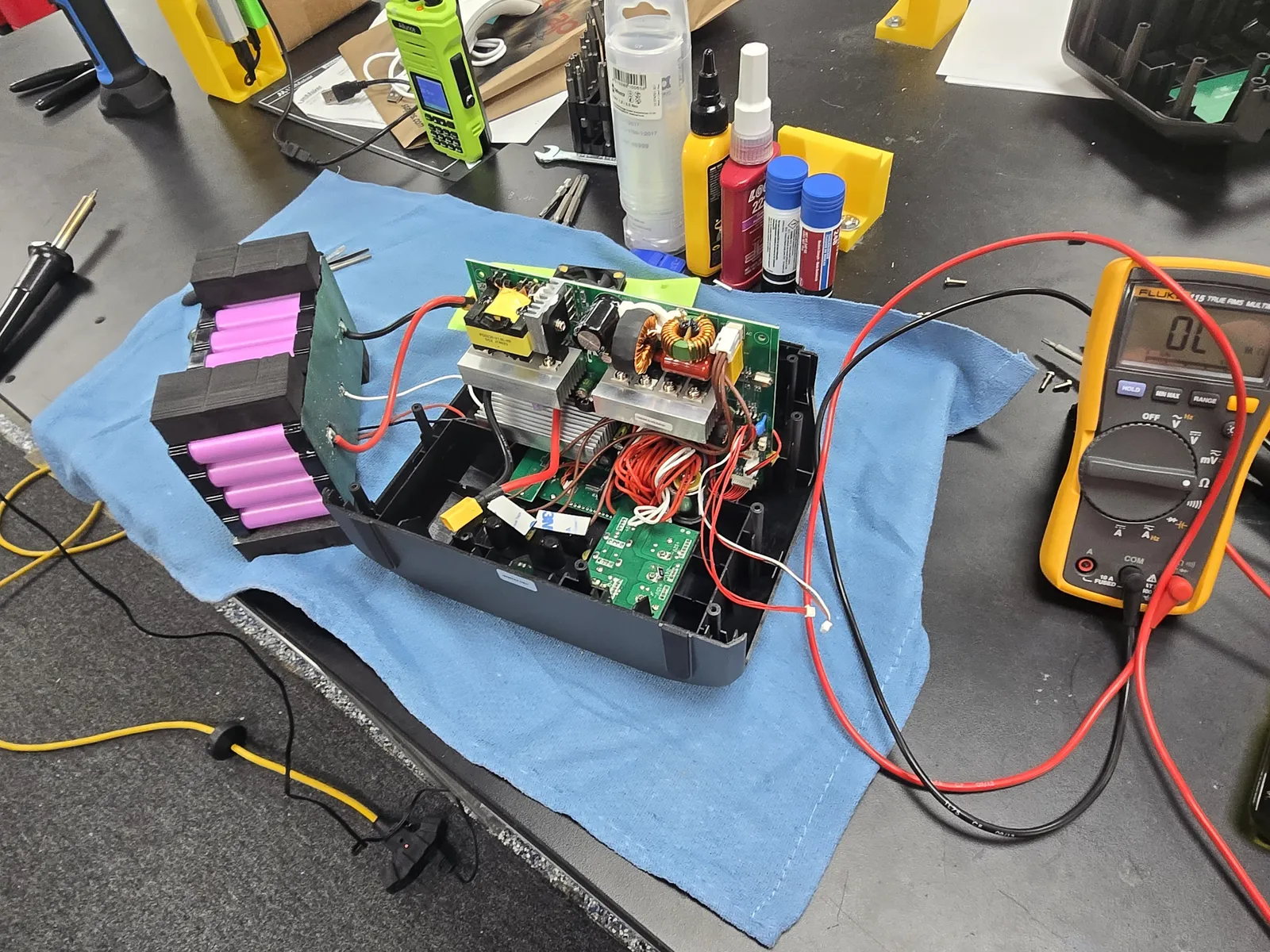
After disassembling the chassis and extracting the main power distribution board, the DC output stage was inspected under magnification. A rogue 391 Ω SMD resistor had fallen directly across the solder paste pads between the 24V supply pin and ground prior to the oven reflow cycle. Across a 24V line, this created an unintended continuous load dissipating approximately 1.47W ($P = V^2 / R = 576 / 391$) in an unventilated area—well below the BMS trip threshold, but hot enough to cause thermal degradation and potential fire risk over time.
Automated Optical Inspection (AOI) Failure
This defect represents a notable escape in factory Quality Control (QC) and automated optical inspection. The resistive bridge did not trigger standard inline open/short continuity checks with high thresholds, allowing an actively dangerous, self-heating fault to pass factory testing and end up in field use.
Rework & Post-Fix Bench Verification
- Desoldered and removed the stray 391 Ω surface-mount resistor from the DC barrel jack solder pads.
- Cleaned and inspected pads with isopropyl alcohol to ensure zero residual solder bridges or flux contamination.
- Verified 24V rail voltage with a digital multimeter; zero parasitic current draw and ambient temperatures maintained during extended idle tests.
- Reassembled enclosure and cleared unit for field camping, CPAP backup, and ham radio operations.